Applied for Jobs, Got tests, and Failed and Succeeded
ShengQu Games
Emmmm, I feel like the second half of my conversation with the interviewer was… hard to say? He was saying we are refining our building etc.
Me: OwO
Afterwards, HR tried to advocate for me, and the recruiter told me: “You need to have work in the classical Chinese style which you don’t have any.”
When I reflected on it, here’s what I think happened—
During the interview, the interviewer asked me about a few areas: my experience as a teaching assistant (which was really about communication and mentoring), my thoughts on AI in the gaming industry, how I built my artistic foundation, and how I usually gather inspiration. At its core, it wasn’t about testing my technical skills—it was about figuring out whether I was someone worth investing in.
Looking back, I actually did a few things right. With the AI question, I didn’t just stop at saying “AI is amazing.” I broke it down into different dimensions: in-game applications (NPCs, behaviors), creative workflows (assisting with design), and marketing. That already went beyond what most students would say—at the very least, it showed that I actually had my own understanding of the industry. I also structured my thoughts well, instead of jumping from one idea to another, and I mentioned my own research paper, which showed that my interest in AI wasn’t just bandwagon-hopping. My overall attitude was open and conversational, more like a discussion than a lecture—which is pretty important because it makes the interviewer feel like you’re someone they can talk to, someone who’s easy to work with.
But the issues were also pretty clear.
First, my way of expressing myself was still very “student-like.” I was mostly saying things like “I understand AI to be this way…” rather than “In an actual project, here’s how I would use AI to improve efficiency…” There’s a big difference between sharing an opinion and demonstrating actionable ability.
Second, I lacked concrete case studies. I talked about a lot of things, but I didn’t tie them strongly to my own projects, specific workflows, or measurable results. The interviewer probably walked away thinking: “She has ideas, but they haven’t been tested yet.”
And thirdly, I didn’t actively connect myself to the role. I didn’t explicitly say: “Here’s how these skills could be applied to your projects.” That part is crucial—companies aren’t there to hear how great you are; they want to see how you can help them get work done.
This experience taught me that an interview isn’t just about listing your abilities—it’s about showing how those abilities can serve the other side. Having opinions is good, but concrete examples are better. Being open is great, but proactively connecting yourself to the role is even more direct.
Also, if your portfolio is missing something, the interviewer will tell you—in this case, it was “no classical Chinese style work.” So I’ll add some next time. Sometimes failing an interview isn’t because “you’re not good enough”—it’s because “you happened to be missing that one thing.” Just fill the gap and move on.
And here’s one more thing I realized only after the fact: humility matters.
I think part of why I didn’t get the offer was that I talked too much. I wasn’t trying to show off—I genuinely wanted to share everything I knew and let them see how I think. But looking back, the interviewer was probably looking for someone they could manage—someone who would follow their lead. My “output-heavy” energy might have made me seem harder to manage, or maybe just not the right vibe.
It’s not that you shouldn’t express yourself—it’s that while you’re expressing, you also need to show that you’re someone who listens, someone who’s willing to learn, someone who can work with others. An interview isn’t a debate. Winning on “who said more” doesn’t matter. What matters is making them feel like “this person is a good fit.”
So now I tell myself: speak clearly when it’s your turn, hold back when it’s not. Be strong in skill, but soft in attitude. At the end of the day, they’re hiring an intern.
XinDong TapTap
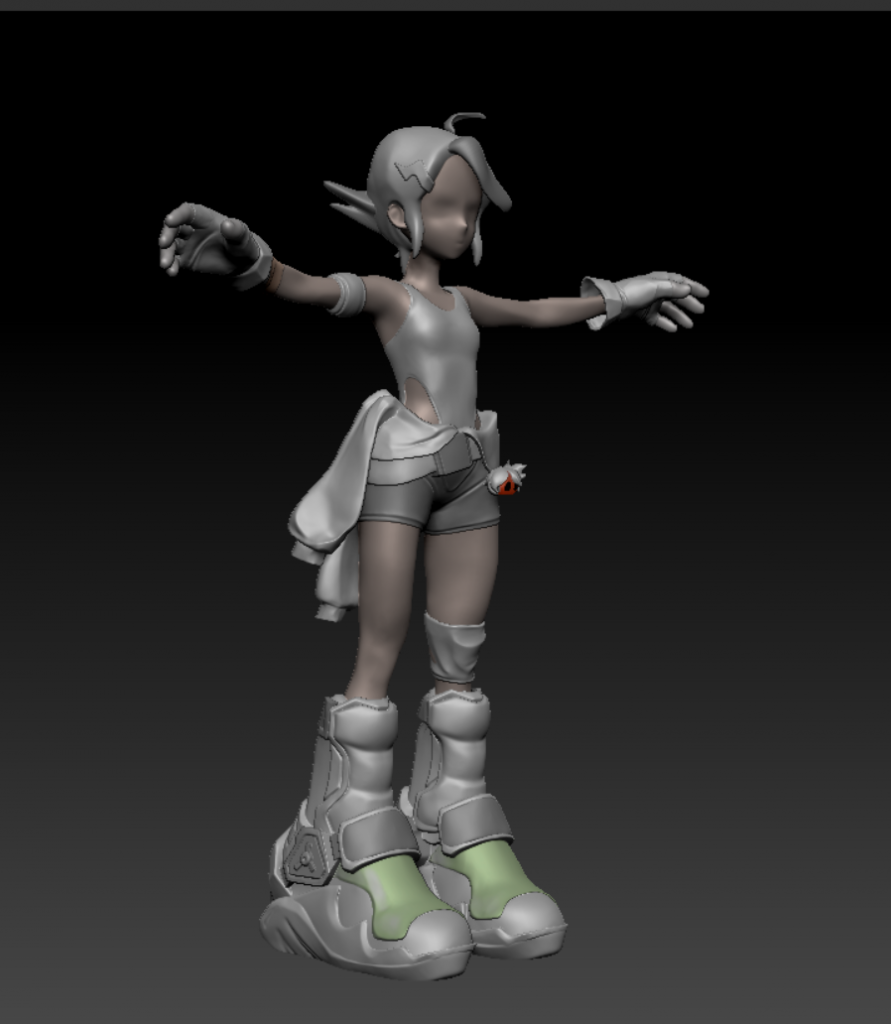
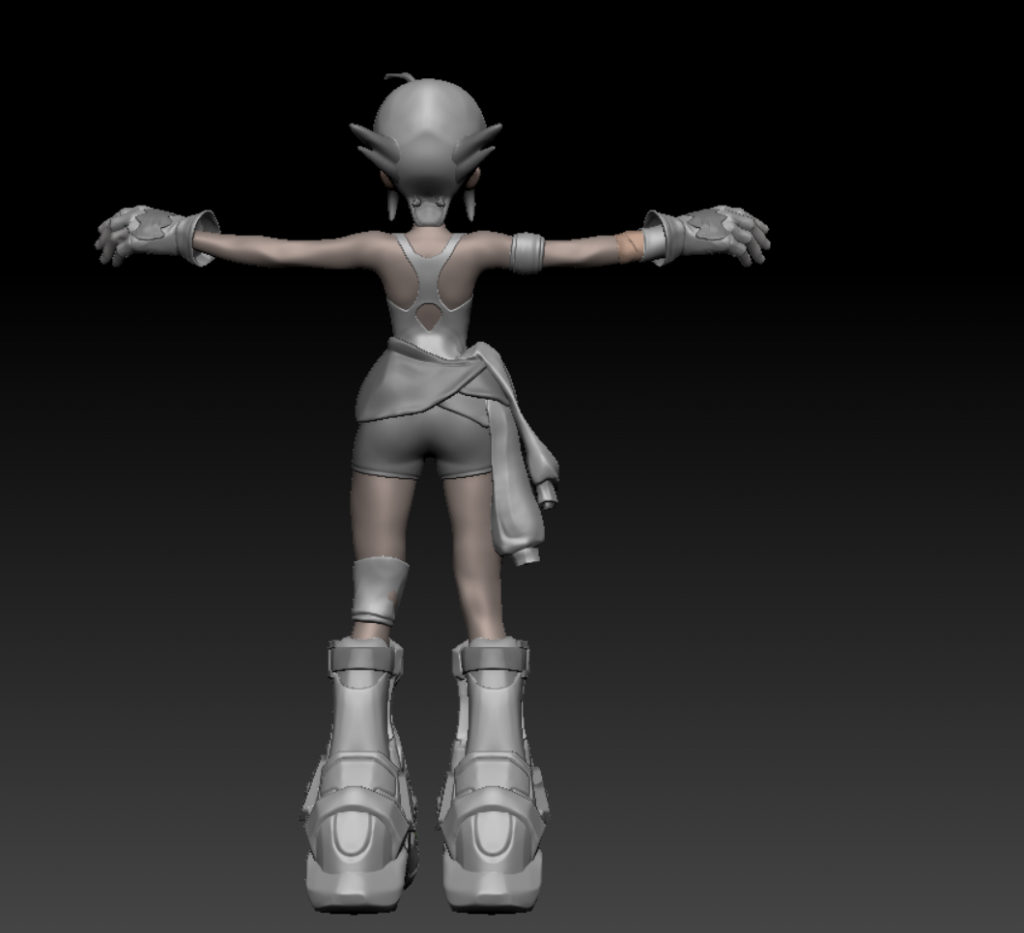
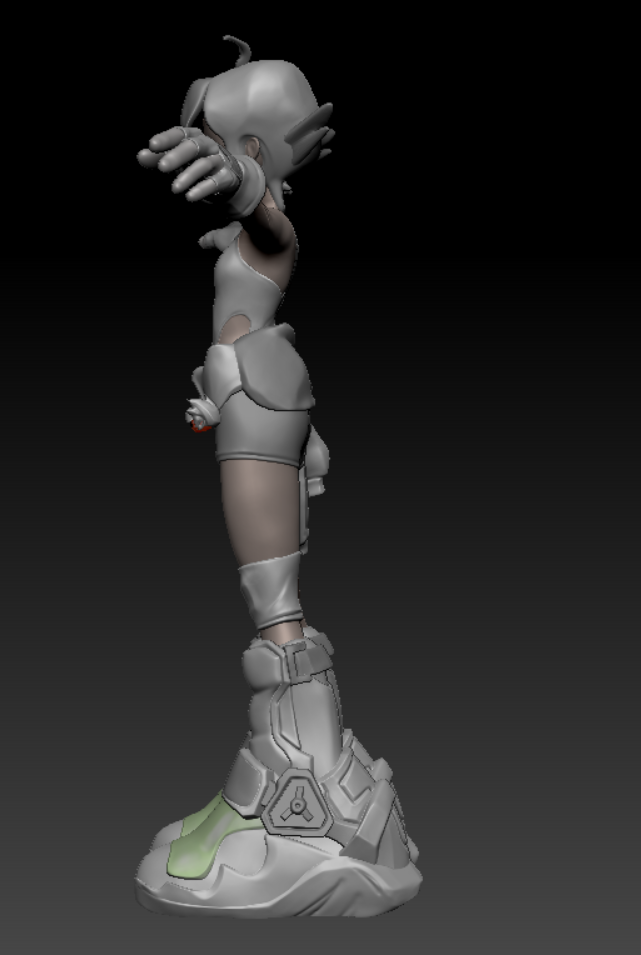
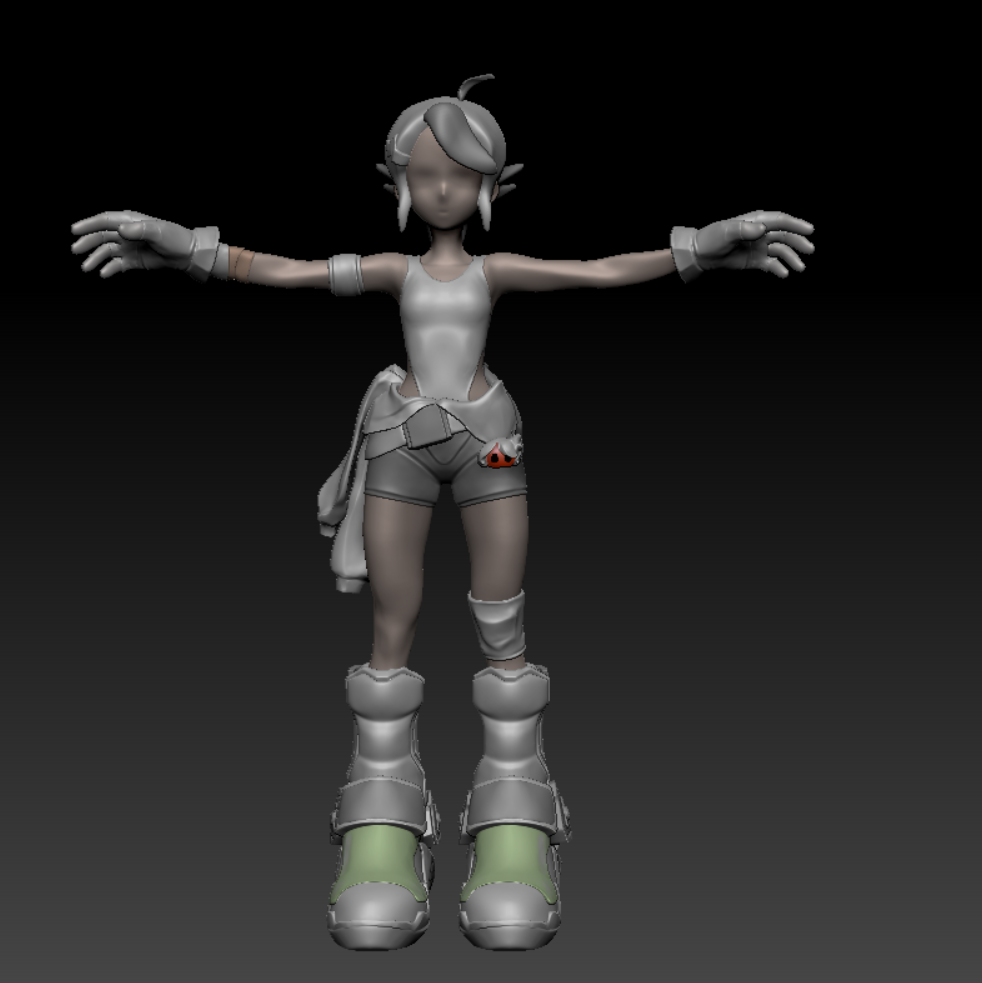
The first time I received a timed art test, I literally cried from the stress…
Five days to finish all the components and apply materials in Substance Painter. I gave it my all, but I just wasn’t skilled enough at the time—I could only roughly complete the model… Naturally, nothing came of it.
So I’ve still got a lot of ground to cover!
But still… sending myself three hugs. Was no attempt, no experience, at least now I have a better sense of the difficulty level, which means I can plan my time more realistically next time—and not be completely paralysed or unable to finish.
I told myself, be scared and overwhelmed the first time I face a task beyond my abilities is completely normal. I still pushed through and gave it a shot after haha. I figure finishing some parts of it is better than giving up entirely, at least I tried. That “unfinished” test actually drew a clear line for me: it showed me exactly where I stand now, and what I need to work on next. So here’s a hug to my past self. Next time, I’ll be way more prepared than the first.
YooZoo Games:


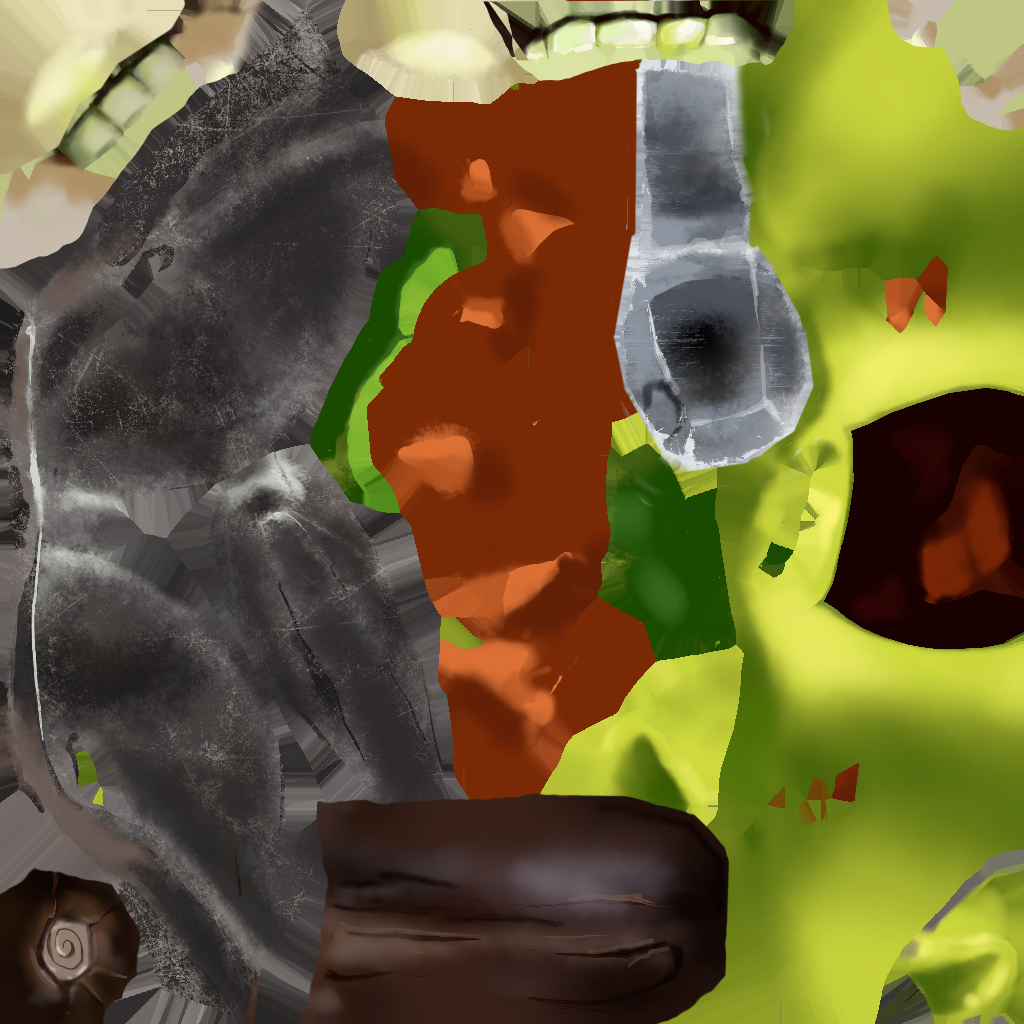

Looking back, I really didn’t do a great job… To be fair, the test came right when I was about to fly back to China, so I was trying to pack while working on it.
Sigh.
Issues in this outcome:
Baking errors: The orange‑red spikes had obvious AO problems—dark, muddy shadows stuck in places that screamed “amateur.” I knew the baking was probably off, but with time running out, I thought, “I’ll just go with it.” The result looked fake right out of the gate.
Poly count was too low:The whole model was blocky, like a low‑poly stand‑in. Areas that should have been rounded were just “toughing it out.” I cut corners on topology to save time, but looking back, when it comes to roundness, poly count really isn’t something you can skimp on.
Wood texture wasn’t there: I basically just laid down a base colour. No wood grain direction, no growth rings, no roughness variation… none of it. It looked like plastic painted brown—no sense of “actual wood” at all.
The helmet was crooked: No exaggeration, it was actually lopsided. The symmetry was off. I probably didn’t rotate the view enough to check while modelling. When I reopened the file later, it was so obviously tilted, like a helmet that had been dented in a crash.
SP file organisation was a mess:Layers were named “Layer 1,” “Layer 2,” “Paint 3,” and the material groups were all over the place. I thought, “I’ll know where things are,” but when I opened the file two days later, even I couldn’t find anything… And everything was in English instead of Chinese. Sigh.
When you’re in a rush, the first things to go are always the ones that seem “not urgent but important”—baking checks, poly count precision, texture details, symmetry alignment, file organisation. And those are exactly what set the baseline quality of your work.
I’ve fallen into all these traps now, so next time I take a test, I’ll know to avoid them in advance. Plus, doing a test while packing for a flight was basically a stress test under extreme conditions—the result wasn’t pretty, but at least it proved I can make it to the finish line when the pressure’s on.
MiHaYo?
I feel like this test was pretty sketchy from the start.
When HR contacted me, they actually asked what my expected salary was. I was like: OWO
I told the HR that I would like to follow the guidelines as I emphasise more on study at the platform.
HR: Oh Sure, then I’ll write dow you want to have the highest salary
Me: I’m an intern, though? owo That’s not what I want.
HR insisted.
Then they sent the test questions about facial capture and stuff. Luckily, I’d taken the face capture elective during Loop Day at the Uni, so I could actually answer a thing or two.
There were also questions about modeling poly counts. Thank goodness we covered that in class! Thank you, lecturers! Thank you!
After that… radio silence.
But looking at it differently, being able to answer those questions showed that what I learn in class really does come in handy—even an elective can end up saving you in a test someday.
As for never hearing back, maybe that says more about the company’s screening process than about me. Not getting in might have been a blessing in disguise.
Some Small Studios
1.
There was a studio which hasn’t say anything but ask me to connect on wechat… My mom advised me not to casually add people on WeChat, especially men, since I’m a young woman.
So I turned it down right away.
But afterwards, I thought about it—this was an opportunity. And opportunities are best seized when they come.
Caution itself isn’t wrong. But in this industry, so many opportunities really do start with “let’s connect on WeChat.”
Looking back, maybe there could have been a middle ground—add them, maintain a polite and professional distance, and then observe and assess along the way. Safety and an open mindset don’t have to be contradictory. It’s just about gradually finding my own balance with each choice.
2.
Then there was this animation studio run by an RCA student.
During the interview, he said straight up: “I’ve worked with LCC students and have friends from LCC. I know you LCC folks are solid. Just come work for me!”
I thought: Wow, this senior is really direct XDDD.
I asked what kind of work they mainly did. He said animation, and they’d need me to handle modelling and such. Then I asked how many people were on the team—my mom told me to always ask that about small studios. He said: three.
I said okay and thanked him sincerely for the opportunity and for taking the time to answer my questions.
After the interview, I talked it over with my family. My mom felt that since I’m a young woman, it’d be better to go with a slightly bigger studio, and the location of this one was a bit remote, so she thought it was best to pass.
So I replied, thanking them for the opportunity and saying maybe next time. But this time, I did add him on WeChat XD.
Having someone say outright, “You LCC people are solid, just come work for me”—that feeling of being trusted was genuinely heartwarming.
But when it comes to making choices, trust alone isn’t enough. I also have to consider safety, environment, growth potential—the practical stuff.
The warmth and sincerity of a small studio are precious, but choosing where to work is ultimately about choosing the environment you’ll be in for the next stretch, and what you’ll have the chance to learn. Adding them on WeChat was a good call—who knows, maybe there’ll be room to collaborate down the line~
3.
Then there was this other company. During the interview, they straight‑up told me: “Your skills are way overqualified for what we do. We’re just doing model labeling—basically the client gives us the textures, and we compare them against standard references to flag any issues. The pay is low, and we don’t really train people.”
My inner reaction: eh? But the job posting said they wanted someone with full‑pipeline skills…?
I asked how many people were on the team. They were really honest about that too: just three. Two co‑founders and one intern.
And that was it.
Me: …Alright then.
Honestly, they were pretty decent—honest and didn’t waste anyone’s time. Compared to companies that drag you through multiple rounds before revealing they can’t pay, this kind of upfront approach is actually a relief.
My mom put it well: “Just treat it as a practice run. The more interviews you do, the more kinds of people you’ll meet, and the more experience you’ll gain.”
This made me realize that interviews are really a two‑way screening process. Them being upfront about “we don’t train people” and “the pay is low”—even if it stings a little—at least didn’t waste anyone’s time.
And the “full‑pipeline skills” requirement on the job posting? Sometimes it’s just a copy‑pasted template. Mom’s “practice run” mindset really stuck with me—every interview, regardless of the outcome, helps you learn how to read a company, what questions to ask, and how to judge whether a role is worth it. The more people you meet, the clearer you become about what kind of team you want to be part of, and what you’re actually worth in the market.
Leave a Reply